To see where we currently operate, please view our Service Area section.
Kate’s K9 Pet Care proudly provides dog walking, cat sitting, small animal pet care, pet taxi services, “Almost Overnight” pet care, and convenient pet supply delivery. To see where we currently operate, please visit our Service Area Page .
Are you searching for jobs working with animals in the DMV area? This guide is for animal lovers in the DMV (D.C., Maryland, and Virginia) considering a career working with animals. As demand for animal care professionals grows, more people are exploring how to turn their passion for animals into a rewarding career. This comprehensive guide covers job types, education requirements, and what it takes to thrive in animal-related roles—helping you find the right path whether you’re just starting out or looking to advance in a specialized field.

Types of Animal-Focused Jobs in the DMV
Careers involving animals span healthcare, research, agriculture, and public service sectors. Working with animals offers career paths in hands-on care, specialized roles, and medical positions. Whether you want to provide daily care, support animal health, or protect wildlife, there are opportunities for every interest and skill level.
Below, we break down some of the most common jobs working with animals in the DMV region, including entry-level and advanced roles.
Book services online in just a couple minutes.
Pet Sitters and Animal Care Attendants
Many people begin their journey working with animals as pet sitters, animal care attendants, or nonfarm animal caretakers. These professionals provide daily care for pets while owners are away or busy.
Responsibilities often include:
- Feeding pets fresh food
- Providing exercise and enrichment
- Cleaning litter boxes or cleaning cages
- Walking dogs and monitoring behavior
- Administering medication when needed
- Providing companionship and supervision
Pet care roles can take place in homes, pet stores, boarding facilities, or other facilities dedicated to animal care. This type of work offers valuable hands-on experience and can often be started with a high school diploma. Many people use this type of role as a stepping stone into veterinary medicine or other animal-focused careers.
Pet Groomers
Pet Groomers maintain animal hygiene and appearance through washing and trimming, requiring technical training or apprenticeships. They play a crucial role in keeping pets healthy and comfortable, and often work in grooming salons, veterinary clinics, or pet stores.
Veterinary Assistants and Vet Techs
Veterinary assistants, veterinary technicians, and vet techs work closely with veterinarians in clinics and offices.
Veterinary Assistants handle basic care activities like feeding and cleaning and generally need a high school diploma.
Veterinary Technicians assist veterinarians by performing medical tests and assisting in surgeries, typically requiring an Associate’s degree.
Responsibilities include:
- Preparing animals for procedures
- Assisting during examinations
- Monitoring animals with medical conditions
- Administering medications
- Collecting samples for testing
- Maintaining medical records
This role is ideal for people who want to treat animals directly while supporting a veterinarian in a clinical setting.
Veterinarians and Veterinary Specialists
Veterinarians are the doctors of the animal world and often treat existing medical conditions and injuries. They diagnose illnesses, treat injuries, and manage long-term health issues for animals. Many veterinarians operate in private practice, working with pets such as dogs, cats, and small animals.
Other veterinarians specialize in specific areas, such as:
- Zoo veterinarians who care for zoo animals
- Large animal veterinarians who treat farm animals
- Wildlife veterinarians who help injured wild animals
Becoming a veterinarian requires extensive education, including a doctorate in veterinary medicine and years of formal training.
Animal Trainers
Animal trainers teach animals an array of skills related to obedience and assistance for individuals with disabilities. They work with pets to teach obedience, correct behavioral problems, and improve communication between animals and their owners.
Training may involve:
- Teaching commands and behavioral cues
- Addressing anxiety or aggression
- Preparing animals for service or therapy roles
- Working with animal behavior specialists
Many trainers begin their careers through apprenticeships, certifications, or extensive practical experience working with animals.
Animal Shelters and Animal Welfare Organizations
Working at animal shelters or animal welfare organizations focuses on helping animals in need. These jobs often include roles such as animal care attendants, adoption coordinators, and shelter managers.
Common responsibilities include:
- Feeding and caring for animals
- Maintaining shelter environments
- Coordinating adoptions
- Helping injured or abandoned animals recover
- Supporting animal advocacy programs
Shelter work can be emotionally challenging but also incredibly rewarding because it directly improves the lives of vulnerable animals.
Animal Control and Animal Law Enforcement
Animal Control Officers enforce animal welfare laws and require training in humane law and sometimes law enforcement. They play an important role in protecting communities and animals.
Responsibilities often include:
- Responding to reports involving stray animals
- Investigating cases of neglect or cruelty
- Enforcing local animal laws
- Participating in animal law enforcement
- Writing reports and assisting with court cases
These professionals help ensure the safety of both people and animals in their communities.
Zookeepers
Zookeepers care for animals in zoos, including food preparation and habitat maintenance, typically requiring a Bachelor’s degree in animal science or biology. They are responsible for the daily well-being of exotic and native species, as well as educating the public about wildlife.
Wildlife Biologists and Conservation Officers
Wildlife Biologists study animals in their natural habitats to understand behaviors and ecosystem impacts, usually requiring a Bachelor’s or higher degree. Conservation officers and researchers work to:
- Study wild animal populations
- Monitor ecosystems and habitats
- Protect endangered species
- Conduct research and collect data on animal populations
These careers often require a bachelor’s degree or higher in animal science, biology, or a related field.
Now that you know the types of jobs available, let’s look at what education or experience you might need.
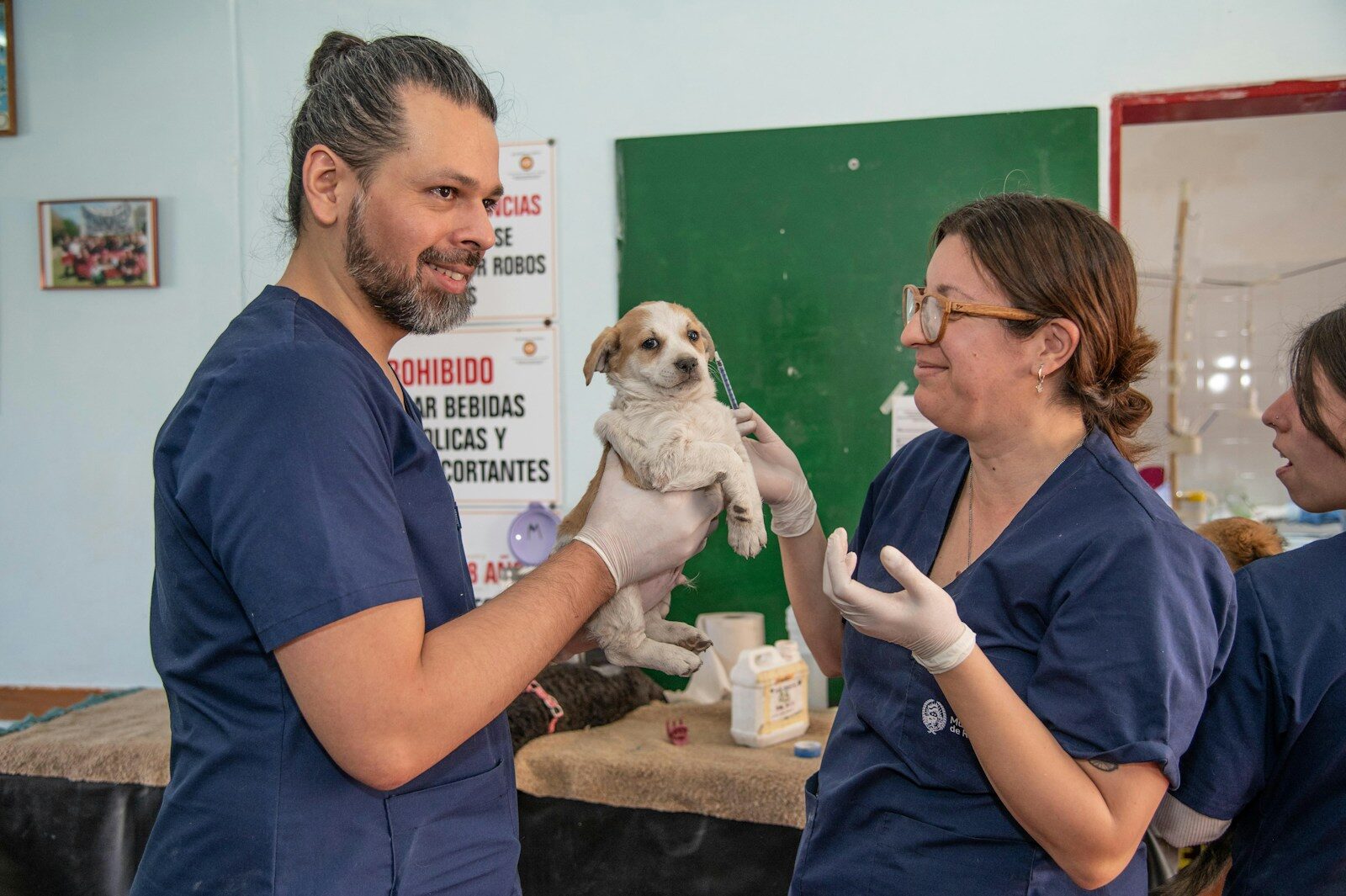
Photo by Jonatan Bustos on Unsplash
Entry-Level Opportunities, Volunteering, and Advanced Roles
If you’re just starting out, there are many entry-level jobs working with animals that require only a high school diploma and on-the-job training. Examples include:
- Pet sitters
- Kennel attendants
- Animal care attendants
- Veterinary assistants
Hands-on experience is valuable for many animal-related careers, and volunteering at clinics or shelters can provide essential training. Many organizations offer volunteer and internship opportunities in animal care, and volunteering at animal shelters or rehabilitation centers can provide valuable hands-on experience. Volunteering can also serve as a “working interview” for those seeking paid positions in animal care.
For those interested in specialized fields, such as wildlife biology or veterinary medicine, university degrees are required. Many animal-related careers require a bachelor’s degree, especially in science-based fields like veterinary medicine and zoology. Veterinary technicians typically need an Associate’s degree, while zookeepers and wildlife biologists usually need a Bachelor’s or higher.
Whether you’re looking for an entry-level position or aiming for a specialized career, gaining hands-on experience through volunteering or internships is a great way to build your skills and network in the animal care field.
Next, let’s explore the education and experience requirements for these roles in more detail.
Education vs Experience Requirements
One of the most common questions people ask when exploring an animal career is how much education is required.
The answer depends on the specific role.
Some careers, such as veterinary medicine or wildlife research, require advanced education, including a doctorate or specialized training.
Other roles emphasize practical experience instead.
For example:
- Pet sitters, kennel attendants, and animal care attendants often start with a high school diploma
- Veterinary assistants may receive on-the-job training
- Vet techs usually complete a two-year program
- Wildlife biologists typically hold a bachelor’s degree in a related field
According to data from the U.S. Bureau of Labor Statistics, many animal care roles are growing as demand for pet services increases. As more households treat pets like family members, pet care services and veterinary support roles continue to expand.
With a better understanding of education and experience requirements, let’s consider what it’s really like to work with animals day-to-day.
Emotional and Physical Considerations
Working with animals can be extremely rewarding, but it also requires emotional strength and physical effort.
Physical Demands
Many animal-care roles involve:
- Long periods of standing or physical activity
- Handling animals of different sizes and temperaments
- Cleaning cages or work areas
- Managing physically demanding tasks
Emotional Challenges and Rewards
Shelter workers, veterinarians, and wildlife rehabilitators may encounter injured animals, neglected pets, or difficult rescue cases. These moments can be emotionally challenging but also deeply meaningful when animals recover or find new homes.
For people who genuinely love animals, the positive impact often outweighs the challenges. Helping animals live healthier, safer lives can be one of the most incredibly rewarding experiences available in any profession.
Now that you know what to expect physically and emotionally, let’s see what traits help people thrive in these careers.
Who Thrives in These Roles
People who succeed in animal-related careers tend to share a few common traits. They usually:
- Have patience and compassion for animals
- Enjoy hands-on work rather than desk jobs
- Stay calm in stressful situations
- Pay close attention to behavior and health signals
- Are motivated by helping animals live better lives
Many also enjoy spending time outdoors, staying physically active, and working closely with animals every day.
For passionate individuals, these careers offer a chance to make a real difference.
Ready to get started? Here’s how you can begin your animal career journey.
Start Your Animal Career with Kate’s K9 Pet Care
If you love animals and want to explore a career working with them, pet care can be a great place to start.
At Kate’s K9 Pet Care, we are always excited to meet people who truly care about animals and want to turn that passion into meaningful work. Our team provides professional pet care services, including dog walking, pet sitting, and overnight care for families throughout Maryland and Virginia.
Working with us offers the chance to gain valuable hands-on experience, build relationships with pets and pet owners, and make a real difference in the daily lives of animals.
If you are someone who loves pets, enjoys staying active, and wants to build a career helping animals, we would love to hear from you.
Reach out through our website to learn about job openings, training opportunities, and how you can start building your future in the animal care world.
For the right person, working with animals is not just a job. It is a calling.