To see where we currently operate, please view our Service Area section.
Kate’s K9 Pet Care proudly provides dog walking, cat sitting, small animal pet care, pet taxi services, “Almost Overnight” pet care, and convenient pet supply delivery. To see where we currently operate, please visit our Service Area Page .
If you’re interested in keeping one of the many cichlid species endemic to the famous (in aquarist circles, at least) African Lake Tanganyika, you’re bound to stumble upon the striped frontosa cichlid (Cyphotilapia frontosa) at one point. Is this hump-headed species the right fish for your aquarium? Let’s find out!
Keep reading for everything you need to know about frontosa cichlid care and how to keep this cichlid in your home aquarium.
Frontosa cichlid natural habitat
The frontosa cichlid is one of the many popular aquarium fish species naturally found in lake Tanganyika. The second-largest lake on the planet, Tanganyika is bordered by Tanzania, the Democratic Republic of the Congo, Burundi and Zambia.
In this Great Rift Lake, frontosas are naturally found in sandy to rocky habitats with few available shelters.
Book services online in just a couple minutes.
Frontosa cichlid appearance
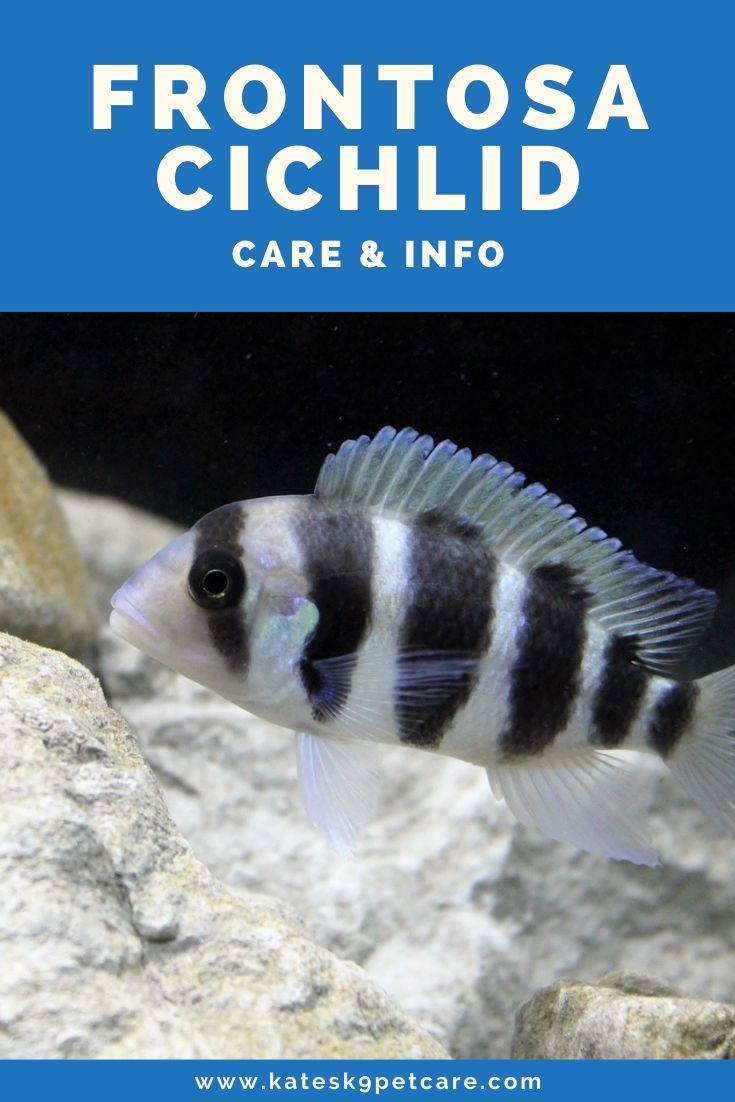
The frontosa cichlid is also known as humphead cichlid, which is a pretty accurate common name if you ask us! Although the hump isn’t very pronounced in the young specimens you’ll find in your local aquarium store, adult fish definitely sport a very big forehead.
This one is among the larger cichlid species you’ll find in your local aquarium store, with a maximum length of up to 10”. Its body is silvery, leaning towards blue on the cheeks and fin edges, with five to seven black vertical bars. The exact appearance of each fish depends on which part of the lake its ancestors were from: some are almost entirely black, while others feature much more silvery coloration or more blue.
Did you know? A selectively bred coppery-red frontosa cichlid also exists.
Frontosa cichlid care: Aquarium set-up
Frontosa cichlid care isn’t too complicated, but one downside for a lot of aquarists is their size. As mentioned, they can grow quite large, meaning they also require a pretty big aquarium to thrive. A single frontosa can live out its days in something like a 75-gallon long tank, but the thing is that these guys are much happier in groups of at least 5. For that, we’d really recommend a tank around 150 gallons or up to avoid having to upgrade later. They grow fast, after all.
Your frontosa(s) will appreciate a pretty typical Lake Tanganyika aquarium set-up. Most importantly, that means alkaline water: the pH should be between 8 and 9, much higher than in the average fish tank. The same goes for hardness. Water quality should always be kept high by means of weekly water changes, and the aquarium must be fully cycled with no traces of ammonia or nitrite.
When it comes to décor, you’ll want to find a solution that’s both sturdy and resembles the species’ natural habitat a bit. The former is important because frontosa cichlids are among those species that like to rearrange their environment! A sandy substrate with some boulders and terracotta flowerpots is great. Plants like Amazon swords are an option, but these guys are diggers, so be sure to protect the plants’ root system with some rocks to deter the fish.
Frontosa cichlid compatibility
As mentioned earlier, frontosa cichlids will appreciate being kept in groups. Although an alpha male will develop if you have multiple boys, a harem situation is usually preferable. 3-4 females and a single male tends to work well.
In terms of tankmates, there aren’t too many fish species that can handle the alkaline water frontosa cichlids like and are large enough to avoid being eaten. Your best bet would be other large Tanganyika cichlids, as that’s who they naturally live with anyway! Peaceful but assertive species that can deal with a little territorial behavior are best.
Alternatively, just keep your frontosas alone. We promise you won’t be bored with them.
Frontosa cichlid diet
This species is a predator, although it has been observed feeding on small amounts of algae in the wild as well. One study found frontosa cichlid stomachs to contain detritus, small crustaceans like shrimp, larvae and small fish (Yanagisawa & Ochi, 1991).
In the aquarium, your frontosas won’t be picky eaters. Commercial, high-quality carnivore flakes or pellets work fine. A varied diet helps keep your aquarium fish healthy, so don’t forget to mix things up with (thawed) frozen fish foods like brine shrimp and live foods like blackworms. Algae tabs, blanched veggies or even nori sheets will satisfy their occasional cravings for plant-based foods.
Conclusion
Although they need a big aquarium to thrive, frontosa cichlid care is easy enough otherwise if you have some African cichlid experience. You’ll enjoy seeing their group dynamics, especially when it comes to breeding: the species is a mouthbrooder, with the females holding eggs and later small fry in her mouth. Truly fascinating to watch!
If you have any more questions about frontosa cichlid care, feel free to give us a shout.